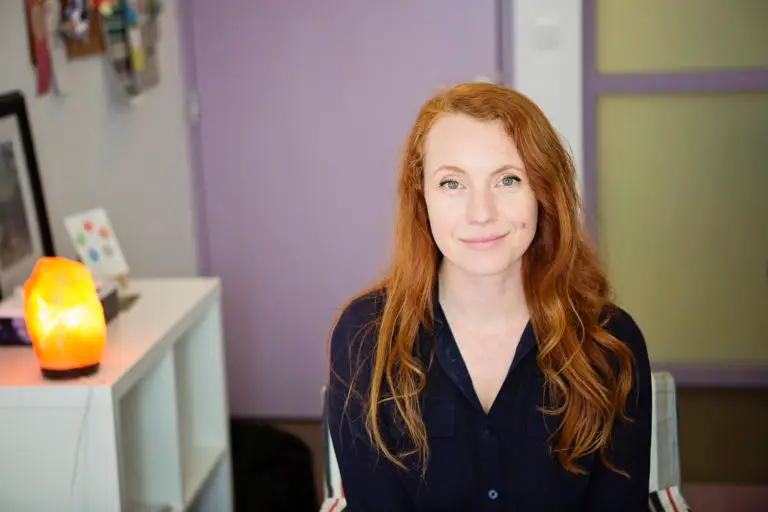
BAD ZURZACH, Switzerland — Five Branches University Clinical Professor Aimée Centivany Aurousseau led a two-day specialized workshop on Chinese medicine and eye health during the international acupuncture and Traditional Chinese Medicine gathering held in Bad Zurzach, Switzerland.
Her workshop, “The Eyes and Chinese Medicine: Eye-System Theory and Clinical Applications,” took place August 15–16 and introduced participants to Mu Xi (目系), or the Eye-System, a clinical framework for understanding the eyes within the larger network of Chinese medicine physiology.
Rather than viewing the eye only as an isolated organ, Eye-System theory examines its relationships with Qi, Blood, channels, Jing, Shen, and emotional states, providing practitioners with a broader framework for clinical assessment and treatment.
Professor Aurousseau’s approach brings together classical Chinese medical thought and contemporary clinical perspectives. Her teaching draws connections among concepts found in classical sources such as the Neijing, later developments in Chinese materia medica, and modern understandings of sensory function.
From Theory to Clinical Practice
Throughout the two-day workshop, participants moved from foundational theory into hands-on clinical application.
Topics included the fundamentals of Eye-System theory; assessment of eye disorders and visual disturbances; the relationship of Jing, Shen, and emotional states to eye health; Qi and Blood circulation; and the channels associated with the eyes.
Participants also explored practical diagnostic methods including pulse diagnosis, palpation, and hands-on assessment involving the head, feet, and related channel pathways.
The workshop demonstrated how traditional Chinese medical concepts can provide a structured framework for investigating highly specialized areas of clinical practice.
Five Branches Faculty on the International Stage
Professor Aurousseau’s workshop was part of Five Branches University’s broader academic participation in the international gathering held August 13–16 in Bad Zurzach.
Five Branches University and the Swiss University of Traditional Chinese Medicine participated in organizing the international gathering, which brought together practitioners, educators, researchers, and speakers from around the world for lectures, workshops, clinical demonstrations, and professional exchange. (LinkedIn)
For Five Branches University, international participation is not only an opportunity to share knowledge. It also provides a forum where faculty can bring specialized areas of Chinese medicine into conversation with practitioners and educators from different countries and clinical traditions.
Professor Aurousseau’s Eye-System workshop provided one such example—connecting classical knowledge, specialized clinical practice, hands-on learning, and contemporary inquiry within an international educational setting.
As Chinese medicine continues to develop globally, these exchanges help strengthen the connection between its classical foundations and its evolving applications in contemporary healthcare.
Five Branches University is proud of our faculty’s contribution to this international exchange and to the continued advancement of Chinese medicine education and clinical practice worldwide.